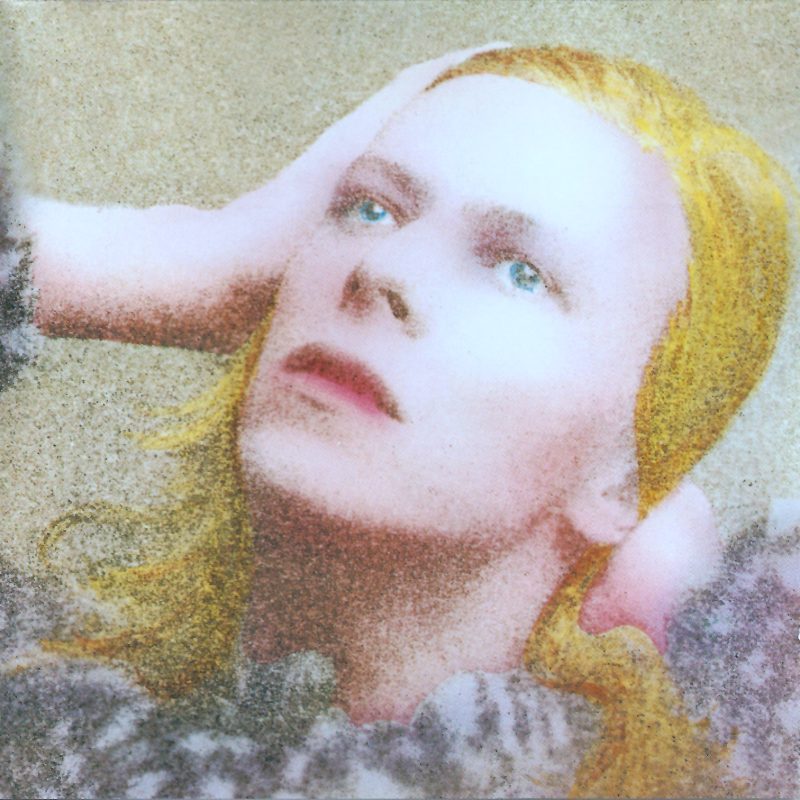
№ 43 of 100
Hunky Dory
David Bowie · 1971 · Rock
Hunky Dory by David Bowie (1971) — a VG+ original pressing is worth £30–£55. The pressing to own, and the case for № 43: Bowie's folk record. Rick Wakeman on piano, Mick Ronson on guitar, and Bowie writing 'Life on Mars?' and 'Changes' inside ten days. The album everything else of his stands on.
What a copy of Hunky Dory is worth
Estimated market value of an original pressing of Hunky Dory by
David Bowie, by sleeve and media condition on the Goldmine grading scale.
- Mint (M)
- £80–£160 (sealed first state with textured inner: £300+)
- Very Good Plus (VG+)
- £30–£55
- Very Good (VG)
- £13–£22
The pressing to look for: 1971 UK, RCA SF 8244 (first state, textured printed inner). Catalogue number 8244.
Researched market ranges for the original pressing; condition,
completeness of inserts and pressing variant all move the figure. The Lead-In values
every record against live marketplace data — value your own
shelf for a current, condition-matched figure.
David Bowie's fourth album, the precursor to Ziggy Stardust. Recorded at Trident Studios summer 1971. The album where Bowie became Bowie.
- Released
- December 17, 1971
- Label
- RCA Records
- Producer(s)
- Ken Scott · David Bowie
- Runtime
- 41:55 (11 tracks)
- Chart peak (US)
- #93 (Billboard 200, rose after Ziggy)
- Chart peak (UK)
- #3 (Record Retailer)
- Certifications
- Platinum (RIAA); 4M+ units globally
- Awards & honours
- Library of Congress National Recording Registry (2017); ranked #88 on Rolling Stone's 500 Greatest Albums (2020)
Bowie's fourth solo album. The transition between The Man Who Sold the World and Ziggy Stardust. Recorded at Trident Studios in summer 1971 with Rick Wakeman on piano.
By 1971, Bowie had released three albums to modest commercial success. He had signed a new contract with RCA and was working with Ken Scott as engineer-promoted-to-co-producer. Mick Ronson, Trevor Bolder, and Mick Woodmansey were the band; Rick Wakeman (then of Strawbs, soon to join Yes) played piano on several tracks.
The album represents Bowie's transition from psychedelic-folk to a more polished pop-rock vocabulary. The Ziggy Stardust persona had not yet emerged; the album operates on Bowie-as-Bowie rather than Bowie-as-character.
The album's eleven songs include 'Changes,' 'Oh! You Pretty Things,' 'Eight Line Poem,' 'Life on Mars?,' 'Kooks' (written for Bowie's then-baby son Zowie/Duncan Jones), 'Quicksand,' 'Fill Your Heart,' 'Andy Warhol,' 'Song for Bob Dylan,' 'Queen Bitch,' 'The Bewlay Brothers.'
Hunky Dory belongs at #43 because it is the album where Bowie's mature songwriting emerged. The album was a modest commercial seller on release but rose to canonical status after Ziggy Stardust's success six months later.
Pressing guide — the one to own
The 1971 UK first pressing is on the orange RCA Victor label, catalog SF 8244, in a single sleeve (not gatefold) with George Underwood's hand-tinted treatment of Brian Ward's portrait. The defining first-press marker is the laminated, glossy front cover and spine over a matte back; later represses dropped the lamination. It was issued with a sepia lyric insert and a rice-paper inner printed 'Made In England'. Runouts are stamped APRS 5947 / APRS 5948 with varying letter suffixes.
