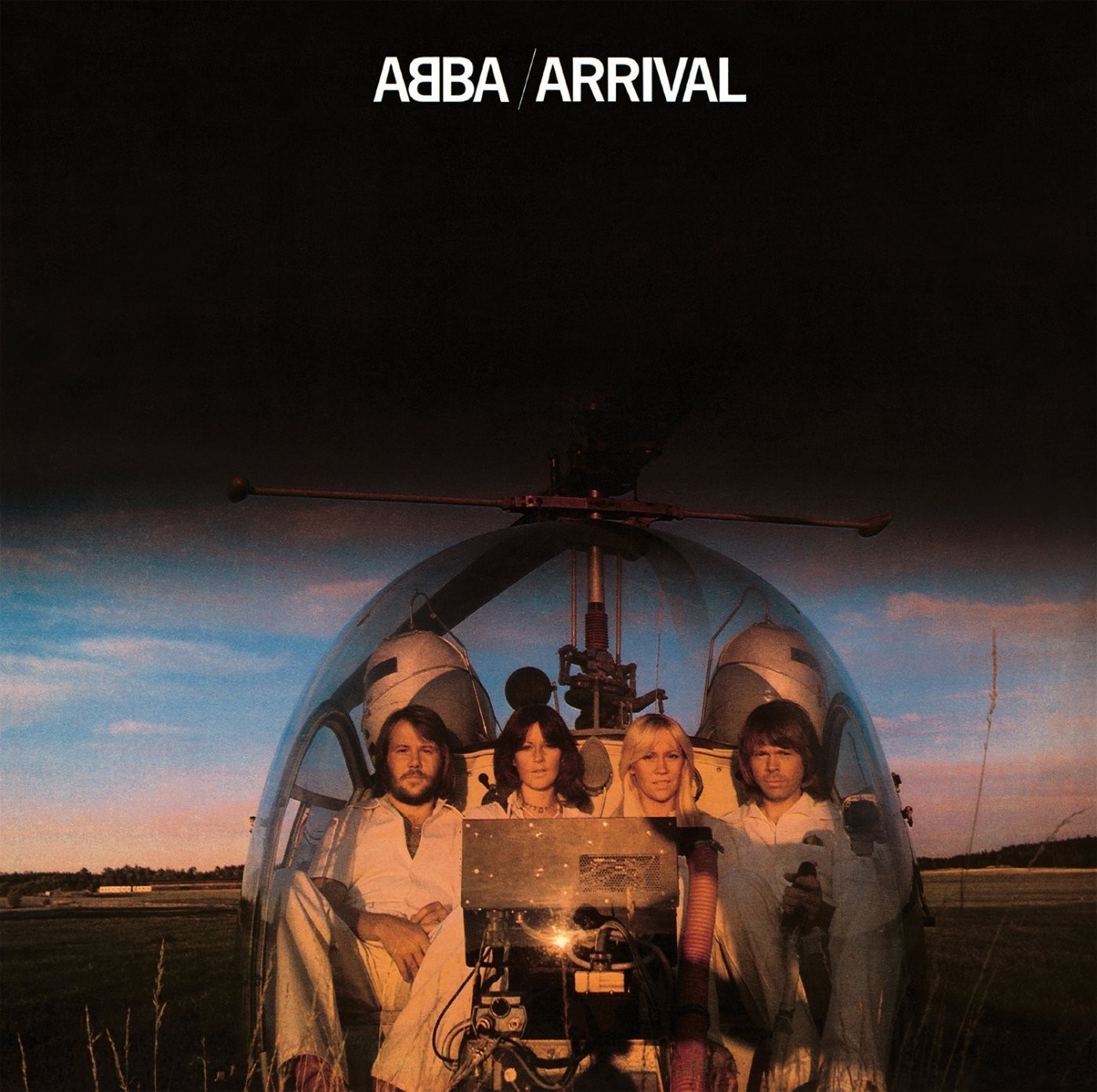
ABBA's fourth album, recorded in Stockholm over more than a year, with 'Dancing Queen', 'Knowing Me, Knowing You' and 'Money, Money, Money'. Superbly engineered, and less inventive than its reputation suggests.
- Released
- 11 October 1976 (Sweden, Polar); November 1976 (UK, Epic); January 1977 (US, Atlantic)
- Label
- Polar Music (Sweden); Epic (UK); Atlantic (US); RCA Victor (Australia and New Zealand)
- Producer(s)
- Benny Andersson and Björn Ulvaeus (engineer: Michael B. Tretow)
- Runtime
- 33:12
- Chart peak (US)
- #20 (Billboard Top LPs & Tape, April 1977); #34 on Billboard's 1977 year-end Top Pop Albums
- Chart peak (UK)
- #1 (Official Albums Chart), 10 weeks at #1 across two spells; 94 weeks on the chart
- Certifications
- BPI Platinum (1 November 1976); RIAA Gold (4 April 1977)
- Awards & honours
- The UK's best-selling album of 1977. Added to the US National Recording Registry in 2024
The best-made ABBA album up to 1976, and its production is the reason to hear it. It's also a year of sessions arranged around a song largely finished in 1975, and the borrowing and the filler show.
The 1976 sleeves of Arrival say it was recorded at the Metronome studio “during 1976”. That isn't quite true. The song people bought it for was started on 4 August 1975, as a backing track the group called 'Boogaloo'. Work on it ran until December, and nothing else for the album was recorded in those months. Then it waited. 'Dancing Queen' came out as a single in Sweden on 16 August 1976, more than a year after that first session. The other nine tracks were made in the meantime, between March and September 1976.
That gap is the best way into the record. Arrival is beautifully made, and the making is the reason to hear it. No earlier ABBA album sounds so finished, and even a hostile Rolling Stone review said as much. But it's a set of singles and experiments arranged around one song that was largely done before the rest was begun. Its best songs are written as well as anything ABBA had done. The album around them doesn't hold together, and its best ideas often started on other people's records. It earns admiration. It doesn't earn reverence.
It wasn't meant to take so long. In the summer of 1975 ABBA had the Nordic countries, the Benelux and Central Europe. Britain was another matter: every UK single after 'Waterloo' had flopped. The plan, Carl Magnus Palm writes in his 2006 liner notes, was an album for spring 1976. Then came the autumn. Three ABBA singles held #1 in Australia for 14 straight weeks. Britain finally came round, and there was a two-week visit to America. The album slipped to the autumn of 1976.
Even the finished song had to queue. Benny Andersson and Björn Ulvaeus wanted 'Dancing Queen' as the next single. Stig Anderson, who owned their label, Polar, insisted on 'Fernando' instead. 'Fernando' was first cut at that August 1975 session, for Frida's Swedish solo album. The English version came out in March 1976 and became their biggest hit yet. Meanwhile Greatest Hits became Britain's best-selling album of 1976. Simon Goddard argued in Pitchfork in 2016 that it turned ABBA into an albums act in Britain. Arrival is where they had to prove it with new songs.
'Boogaloo' started from other people's records, and Palm names them. George McCrae's 'Rock Your Baby', a 1974 American #1, was the inspiration for the rhythm track. The drumming on Dr. John's Gumbo was a further influence. Roger Palm, not the album's usual drummer, plays on it, and Sven-Olof Walldoff arranged the violins. The first reactions were private ones. Benny took a tape home, and Frida cried. Björn played it to his sister, because Agnetha was asleep. Agnetha's verdict came later, in words Palm quotes: “We knew immediately it was going to be massive.”
What they built from those records is better than either. The voices are in at 0:15, but the title isn't sung until 0:33, so the song is already moving before it names itself. Goddard hears a falter in the beat under the pounding piano, disco that limps. That limp is the song's character. It's dance music that sounds a little unsure of the dance floor, and the uncertainty is what makes it moving rather than merely bright. The last line is sung at 3:20, and after it the final 24 seconds carry no lyric at all. It spent 6 weeks at #1 in Britain from September 1976. In April 1977 it became their only American #1.
The 1976 sessions began on 23 March with 'Knowing Me, Knowing You', and it's the best thing on the record. Frida sings it, with Lasse Wellander on electric guitar. The song is patient. Twice the lyric stops, for about 17 seconds from 1:14 and about 23 from 2:36. The arrangement holds the mood without her. Benny later counted it among the group's five best recordings, Palm reports. People now hear it as a song about the ABBA divorces. It can't be. Palm points out that it was written and recorded long before either couple split. The sadness was written, not confessed, and that's a harder thing to do well. It spent 5 weeks at #1 in Britain in April 1977.
Two more songs show where the craft came from. 'Money, Money, Money' went through at least two working titles, 'Gypsy Girl' and 'Been and Gone and Done It'. Goddard hears Cabaret in it. Frida sings it, Anders Glenmark plays the electric guitar, and it peaked at #3 in Britain. 'My Love, My Life' began as 'Monsieur, Monsieur'. Palm writes that its backing vocal arrangement was inspired by the whispery sounds of 10cc's 'I'm Not in Love'. Agnetha sings the lead and Rutger Gunnarsson arranged the strings. It's the loveliest ballad on the album, and its backing voices were learned from a British hit of the year before.
What holds the best of this together is the sound, and the sound is the album's real strength. Benny and Björn produced it, and Michael B. Tretow engineered it. Tretow, who died in May 2025 aged 80, worked on every ABBA album except Voyage. The result is a record where nothing is out of place. Ken Tucker, reviewing it for Rolling Stone, called it the smoothest ABBA album yet. He didn't mean it kindly, but he heard it right. Smoothness is a real achievement on a record made in pieces over more than a year.
The polish can't save everything. 'Dum Dum Diddle' is the weakest track, and the one real lapse in the writing. The band said so first. Björn told the Guardian in 2002 that he'd spent all night trying to write a decent lyric, and took this one in to prove he'd been working. When Benny joked that the record company should release an Abba Wood instead of Abba Gold, Björn nominated it. Palm records that Frida called it silly. 'Why Did It Have to Be Me' nearly went a different way. Its first backing track, cut on 26 April 1976, became 'Happy Hawaii', with steel guitar and sea effects. A country version followed. Only in late August did the group go back to the demo's Fats Domino feel, with Björn singing and Lars O. Carlsson on saxophone. The rescue works, but the song sounds like a visit from another band, and it breaks the album's spell.
Side two is where the album thins out, once 'Money, Money, Money' has opened it. 'Tiger' has some bite, and Goddard hears it as an unsettling thriller. 'That's Me' was good enough to back 'Dancing Queen' as a B-side, and not much more. Then the record ends on its one real surprise. 'Arrival' was the last track recorded, in the almost month-long block that began on 20 August 1976. It started as 'Ode to Dalecarlia', from Benny's love of the fiddle music of Dalarna. Palm describes it as strings, keyboards and wordless voices. Lillebil Ankarcrona, then the partner of the sleeve designer Rune Söderqvist, suggested the album's title. The tune was renamed to match. It's the only place where Arrival sounds like nobody else, and it lasts 3 minutes.
Britain settled the question Greatest Hits had raised. Arrival entered the chart at #6 on 27 November 1976. It reached #1 in January 1977 and again from April to June, 10 weeks at the top in all, and it stayed on the chart for 94 weeks. It was ABBA's first UK #1 studio album and the country's best-selling album of 1977. America bought the single instead. The album peaked at #20 in April 1977 and finished the year at #34 on Billboard's list, far below Rumours at #1. The critics split along similar lines. Record Mirror gave it five stars. Tucker heard “Muzak”, and Robert Christgau gave it a C in the Village Voice. At home, left-wing critics in Sweden scorned ABBA as commercial. In 2024 the Library of Congress added the album to the National Recording Registry.
The case against it was made at the time, and made well. Tucker didn't only call it Muzak. He resented that ABBA would crowd out more adventurous artists, and he predicted it would break ABBA in America. Christgau's review was a mock list of plans to stop them. In his earlier review of Greatest Hits, he had noted ABBA's American defenders reaching for Spector and the Brill Building. Half a century on, the defenders have won. Goddard's 2016 Sunday Review hears the first ABBA album with a strong identity, and sadness under its surface. The Library of Congress observed that nothing ABBA had released in America before it had matched their success elsewhere. Both are right. Neither quite answers Tucker, because the smoothness he heard is real. What he got wrong was the idea that smoothness and feeling can't share a record.
So what is it worth now? Arrival is a very good album with clear limits. The production is close to faultless. Three of its songs are as well written and as well made as any pop of the decade: 'Dancing Queen', 'Knowing Me, Knowing You' and 'My Love, My Life'. The limits are in the album around them. It borrows more than it invents. Its rhythm drew on McCrae and Dr. John, its backing voices on 10cc, and its shape on a year spent waiting for one single. It doesn't hang together either. One track is a dud by its writer's own account, and side two coasts after its opener. Admire the engineering and keep those three songs. Just don't mistake polish this good for daring.
Pressing guide — the one to own
The original is the Swedish Polar POLS 272, released on 11 October 1976. The British Epic EPC 86018 followed in November and the American Atlantic SD 18207 in January 1977. All three come in a standard sleeve with a printed inner. It was the first ABBA studio album to carry Rune Söderqvist's logo with the reversed B. There are 24 runout variants listed for the main Swedish release, and none is marked as the first state. The Australian RCA Victor first press is the odd one out: a gatefold, with 'Fernando' added.