
Deep Dive
Bad
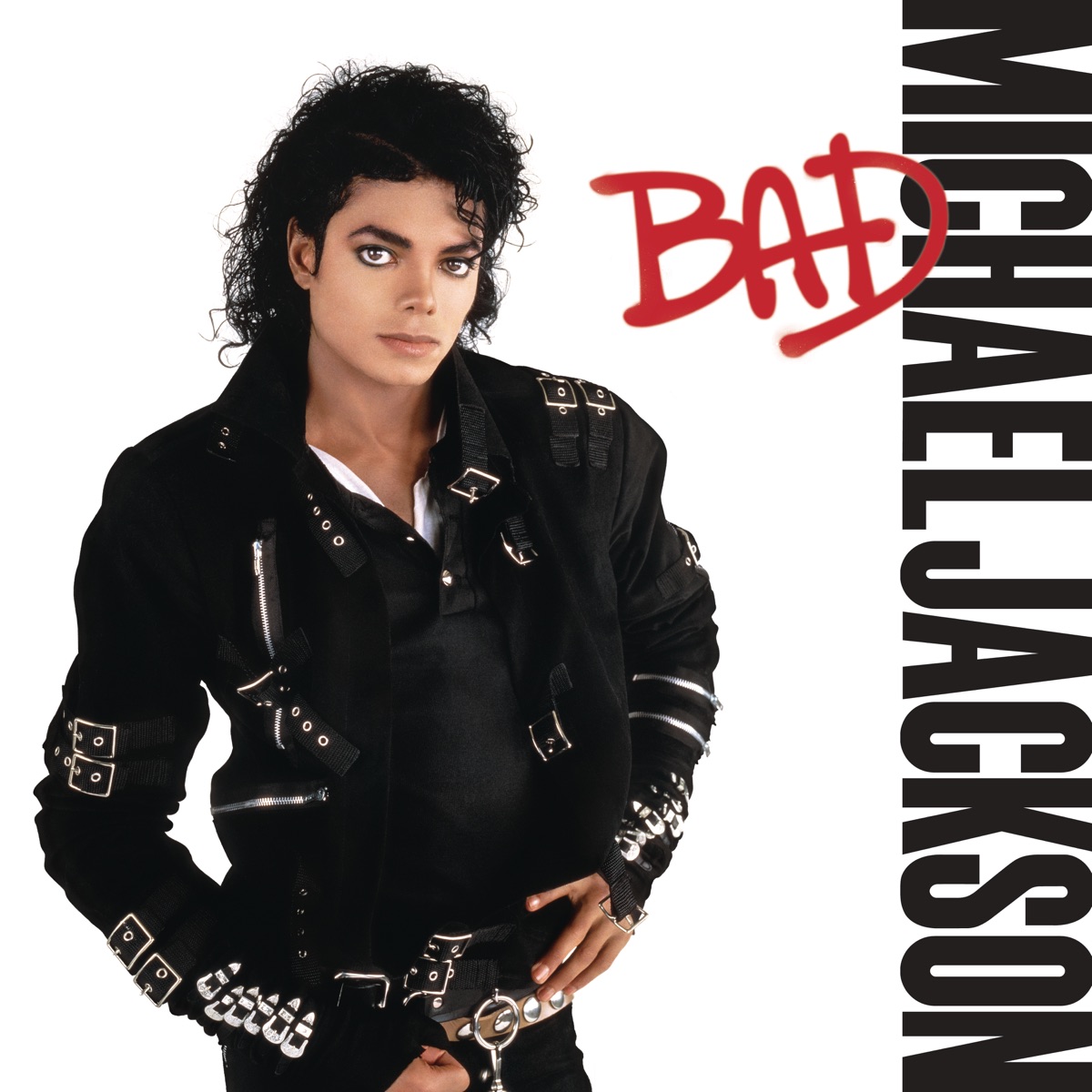
Bad by Michael Jackson (1987) — what a copy is worth and which pressing to own, in a full Lead-In dossier: Michael Jackson's follow-up to Thriller produced five US #1 singles and was still called a letdown at home in 1987.
Bad by Michael Jackson (1987) — what a copy is worth and which pressing to own, in a full Lead-In dossier: Michael Jackson's follow-up to Thriller produced five US #1 singles and was still called a letdown at home in 1987.
Michael Jackson's follow-up to Thriller, and the first album to produce five US #1 singles. Judged a letdown at home in 1987, it has since been rescued by its critics, a little too far.
Bad's only Grammy in 1988 went to its engineers, and that verdict has aged well. The sound and the singing are first-rate. The middle of the record sags, and too much of it replays Thriller.
On 2 March 1988, Michael Jackson went into the Grammys with 4 nominations, tied with Emmylou Harris and U2 for the most of the night. He went home with nothing. Album of the Year went to U2's The Joshua Tree. The one award Bad did win, Best Engineered Recording, went to the people at the desk: Bruce Swedien and Humberto Gatica. At the time it looked like a snub with a consolation prize attached. Read now, 38 years later, it looks like the fairest review the album got.
Bad is a superbly made record, held back by its running order and by its debts to Thriller. Its production and Jackson's singing are as good as anything he released, and its best songs stand with his best. But four slight songs sit together in the middle, and too much of the rest restages Thriller instead of moving past it. The case for it was made by Joseph Vogel in The Atlantic in 2012. He ranked it with Prince's best work among the finest albums of the 1980s. The case against came 9 days later in the same magazine, from John Murph: Bad was 'bigger and bolder, but not better'. Murph is closer to the truth about the album as a whole. Vogel is right about the sound.
It was made to answer an impossible question. On release day Jon Pareles framed it in the New York Times: what could Jackson do to follow the best-selling album to date? The wait between the two records had stretched to nearly five years. Thriller had been certified 20× Platinum in America by the time Bad arrived. Jackson set his own target. Rolling Stone reported in September 1987 that a note on his bathroom mirror read '100 Million'. Geoff Mayfield, Billboard's retail editor in 1987, heard second-hand that Jackson carried 30 cents in his pocket, for 30 million copies.
Quincy Jones set a different target. He told Rolling Stone in 2017 that the turmoil in Jackson's life was mounting. So he suggested 'a very honest album', with Jackson writing all the songs. Jackson wrote 8 of the 10 songs on the LP and 9 of the 11 on the CD. On Thriller he'd written 4 of 9. That shift is real, and the songs he wrote here are confident and well built. Few of them reach the level of 'Billie Jean'. And by Jones's own account, the biggest song on the record is one Jackson didn't write.
Jones's brief didn't produce a confessional record. Pareles called Bad 'an even less revealing album' than Thriller, and found the outlaw pose of the title track hard to believe. Vogel reads it differently. He traces the album's themes of control and escape to the 'Wacko Jacko' coverage, a nickname a British tabloid first used in 1985. That reading fits 'Leave Me Alone', the extra song on the CD, whose video Vogel sees as a reply to the tabloids. It fits the rest less well. Elsewhere, whatever honesty the record has lives in the singing, not the words.
The making ran on two teams. Jackson had a home studio at Hayvenhurst in Encino, which he called 'the Laboratory'. There he worked with Matt Forger, John Barnes, Christopher Currell and Bill Bottrell, a group often called the B-Team, Vogel writes. He told collaborators he wanted sounds the ear had never heard. Forger has described the machines they used to find them. The Fairlight CMI had a light pen that could redraw a waveform on screen, and the Synclavier took that further. Jackson also enlisted Denny Jaeger, a Synclavier designer from the Bay Area, and Jaeger's sound opens 'Dirty Diana'.
By the time the demos reached Westlake in Los Angeles, Vogel writes, most of the songs' key elements were in place. Jones and Swedien, the A-Team, did the finishing there. That meant polishing and adding, and also cutting down, which Jackson didn't welcome. The sessions had produced more than 60 songs, and at one point he considered a triple album. The assistant engineer Russ Ragsdale estimated that more than 800 multitrack tapes were made. Jones remembered the pace in 2017: 'They were carrying second engineers out on stretchers. I was smoking 180 cigarettes a day.'
The best of the production is in details the sleeve bothers to credit. 'Smooth Criminal' runs on Jackson's own heartbeat, recorded by Dr Eric Chevlen and processed in the Synclavier. Hugo Zuccarelli supplied the Holophonics. The creaking and heavy breathing are credited to Jackson's manager, Frank DiLeo, and Swedien is the voice of the police. 'Speed Demon' opens with a race-car recording credited to Spherical Sound. On the title track, Jimmy Smith is credited with a solo on a Hammond organ played over MIDI, and Greg Phillinganes with one on synthesiser. The singing stops at 2:24 for about 25 seconds. This is a pop record that treats sound effects as instruments, and the placing of them is still a pleasure to hear.
Jackson's singing is the other half of the case. Pareles noticed straight away that he'd pushed his mannerisms further: the intakes of breath, the hesitations, the whoops. The result, Pareles wrote, was lead singing that 'finds percussion in every consonant'. The engineer chose to keep all of it. Swedien has said that on 'The Way You Make Me Feel' he left Jackson's vocal habits in, rather than make it 'antiseptically clean'. The sleeve credits the finger snaps to Currell and to Jackson himself. It's the loosest track here, and one of the best. 'Man in the Mirror' puts the voice at full stretch, with the Winans and the Andraé Crouch Choir behind it. Siedah Garrett and Glen Ballard wrote it after Jones asked his songwriters for 'an international kind of anthem'.
The weaknesses sit mostly in the middle of the record. After 'Bad' and 'The Way You Make Me Feel' come 'Speed Demon', 'Liberian Girl', 'Just Good Friends' and 'Another Part of Me'. Murph filed all four under filler, and four in a row is too many. 'Just Good Friends' is the clearest miss. It's a duet with Stevie Wonder on a song by Terry Britten and Graham Lyle, and it should have been an event. Jones later said he made a mistake on it: 'That didn't work.' The other three are well made and slight. 'Speed Demon' has a great intro and little after it, and 'Liberian Girl' is pretty but never moves.
The bigger problem is how closely Bad follows Thriller's plan. Epic's product manager, Larry Stessel, has said the plan was to 'do everything the Thriller way'. So the campaign opened with a ballad duet, 'I Just Can't Stop Loving You', as Thriller had with 'The Girl Is Mine'. Murph called that single 'a listless pop confection', and it is. Pareles heard the echoes inside the songs too. A melody line from 'Billie Jean' returns in 'Liberian Girl', and the riff of 'Bad' recalls 'Thriller'. 'Dirty Diana' sets the sexual fear of 'Billie Jean' against the hard-rock guitar of 'Beat It', played this time by Billy Idol's guitarist, Steve Stevens. Each of those songs works on its own. Together they make Bad sound like a sequel, and Murph's word for it, 'sterile', fits these moments best.
Commercially, the follow-up did what it could. Epic shipped 4.2 million copies, and Stessel says half of them sold in the first week. It held #1 on the Billboard 200 for 6 weeks. In Britain it sold 350,000 copies in its first week, a record at the time, and 1.6 million in under 4 months. It was the UK's best-selling album of 1987, and the Official Charts Company later placed it second among the decade's albums, ahead of Thriller. By the OCC's count, at the end of the 1980s Britain was the only country where Bad had outsold Thriller. Then came the singles. Five reached #1 on the Hot 100, the last of them 'Dirty Diana' on the chart dated 2 July 1988. No album had produced more than four. Billboard has since added the honest footnote: 33 different singles reached #1 in 1988, and three of Bad's five were among them. Short stays at the top were normal, and Bad's five spent 7 weeks there between them.
None of it was enough in America in 1987. Billboard has since described the album as one that largely failed to live up to commercial expectation. It stood at 6× Platinum in the US at the end of the 1980s, against the 20× Thriller had reached by Bad's release. The sales kept coming, and the RIAA certified it Diamond in 2017 and 11× Platinum in 2021. Its sound pointed forward, too. Murph hears the beats of 'Bad', 'Speed Demon' and 'Smooth Criminal' as a first step towards the new jack swing of Dangerous. But the reappraisal, Vogel's included, has gone too far. An album with this many hits is easy to mistake for an album with this many great songs.
So the Grammy voters of 1988 were closer to right than they looked. Bad's strengths are its engineering and its singer. Swedien's mixes, Currell's Synclavier and Jackson's voice make even the weaker songs worth hearing. Its best four, 'Bad', 'The Way You Make Me Feel', 'Man in the Mirror' and 'Smooth Criminal', belong on any short list of his work. The rest is a superb team running a plan that had already worked. That makes it a very good record with clear limits: one to admire and play often, and to stop short of revering. It was the last album Jackson and Jones made together, and it sounds like a partnership running on skill more than discovery.
No single pressing is the prize. There were 116 catalogued vinyl versions in October 2026, with 1987 and 1988 pressings from more than 40 countries, from Brazil to South Korea. The guide below covers the US, UK, European and Japanese ones. The detail worth knowing is the mixes. Collectors note that the first US CD, EK 40600, carries the original mixes of five songs. They are 'Bad', 'The Way You Make Me Feel', 'I Just Can't Stop Loving You', 'Dirty Diana' and 'Smooth Criminal'. Some later editions use revised mixes instead: the catalogue notes for Mobile Fidelity's 2026 set say it uses the 1994 revisions.
© The Lead-In · an independent, reader-supported music publication.