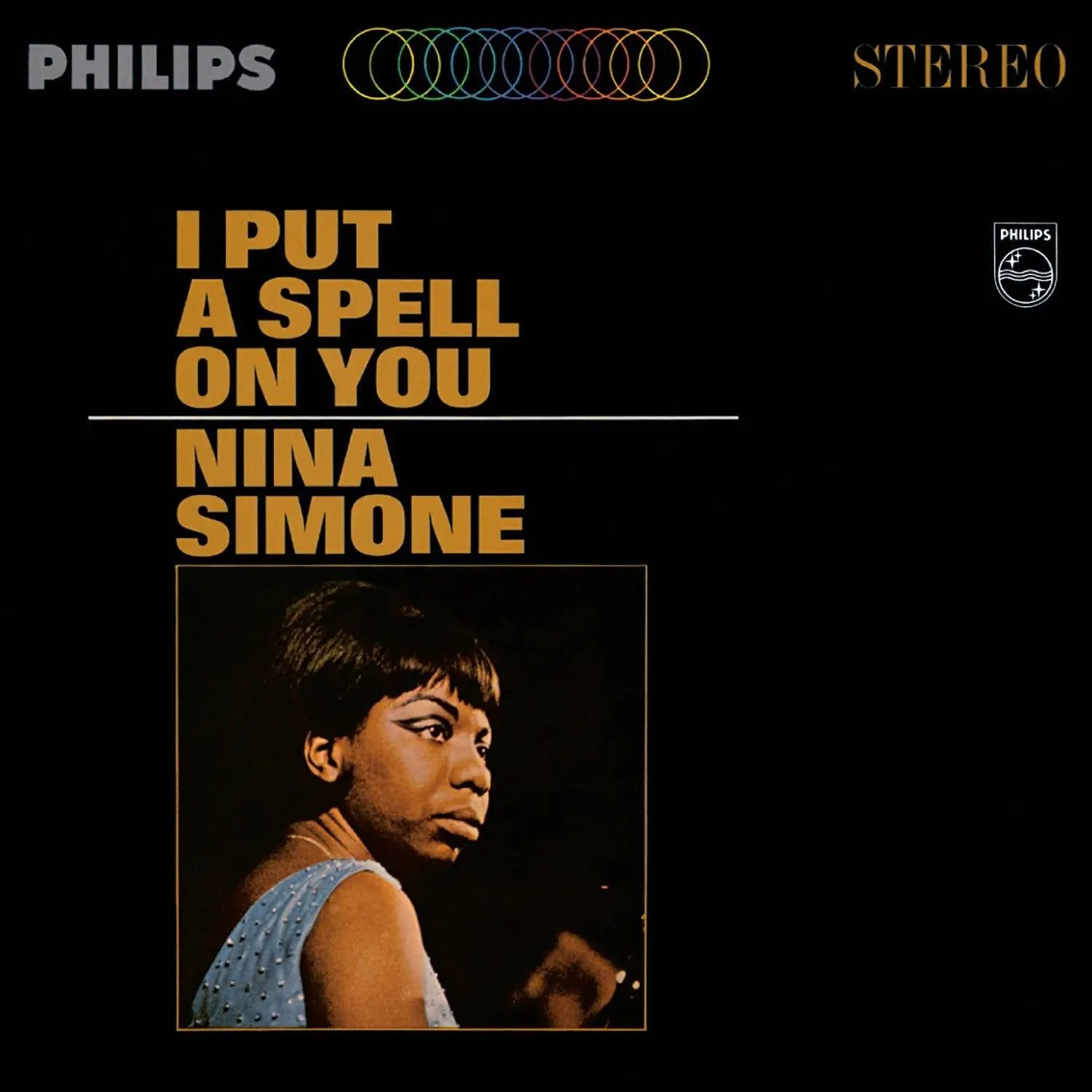
Nina Simone's third album for Philips, cut in New York in January 1965: 12 songs she chose but didn't write, and two recordings that outgrew everything around them.
- Released
- June 1965 (US, Philips); in the UK by July 1965
- Label
- Philips: PHM 200-172 (mono) / PHS 600-172 (stereo) in the US; BL 7671 (mono) / SBL 7671 (stereo) in the UK
- Producer(s)
- Hal Mooney (arrangers and conductors: Hal Mooney and Horace Ott)
- Runtime
- 33:19
- Chart peak (US)
- #99 (Billboard 200, chart dated 24 July 1965), her highest peak on that chart; #10 on Billboard Jazz Albums (23 April 2022)
- Chart peak (UK)
- #18 (Official Albums Chart, 31 July 1965), 3 weeks on the chart
- Certifications
- The album holds no RIAA certification. Her recording of 'Feeling Good', issued later as a single, was certified 2× Platinum by the RIAA on 19 September 2025
- Awards & honours
- 4 stars in Record Mirror (31 July 1965); #3 in NPR's 150 Greatest Albums Made by Women (2017); #88 in Apple Music's 100 Best Albums (2024)
Critics call it her pop album. The original sleeve notes say she picked every song. Its strength is her singing, which makes two tracks essential and carries several ordinary ones further than they deserve.
On the Billboard album chart dated 24 July 1965, I Put a Spell on You reached #99. It went no higher. That modest number is still the best any Nina Simone album managed on the main American chart. In Concert, from the year before, stopped at #102. Wild Is the Wind, from the year after, got to #110. The same week, the album entered the British chart, where it rose to #18. Half a century later the honours arrived. In 2017 NPR ranked it #3 among the 150 greatest albums made by women. In 2024 Apple Music put it at #88 in its 100 best. That's a long way from #99, and most of the distance was covered by two songs.
Critics call it her pop album. Audie Cornish, writing for NPR, called it the closest Simone came to pop. It's easy to hear that as a label's idea: a difficult artist dressed in strings by two arrangers and sent out to sell. The original sleeve notes tell a different story. Roger Short wrote that Simone chose the songs, for their meaningful words and music, and that she called them 'heavy' songs. So this is her record, strengths and limits alike. The strength is the singing, which lifts two tracks above everything around them and carries several more past their material. The limits are the songs she picked and the settings around them. It's a very good album built on a great performance, and not quite more than that.
The record before it pointed somewhere else. Her first album for Philips, Nina Simone in Concert, carried 'Mississippi Goddam'. It was her response to the murder of Medgar Evers on 12 June 1963 and the Birmingham church bombing three months later. Broadway-Blues-Ballads followed in 1964, so I Put a Spell on You was her third Philips album. She was working fast: 10 of her albums came out between 1964 and 1967. Eleven of these 12 tracks were recorded in New York in January 1965. On 24 March she sang at the rally before the last day of the Selma to Montgomery march. The album came out in June. It's tempting to hear it as a step back from the fight. Better to hear it as the other half of the same job: the singer of 'Mississippi Goddam' taking anyone's song and making it carry weight.
How it was made is documented only in outline. Hal Mooney produced it, and he arranged and conducted seven tracks, including the title song and 'Feeling Good'. Horace Ott arranged and conducted four, among them both Charles Aznavour songs. The editions we checked credit Simone with vocals and piano; her estate's website lists her with arrangements too. None of those editions names the studio, and the only other musician they credit is her guitarist, Rudy Stevenson. Record Mirror's reviewer in 1965 heard string backing with touches of expressive piano. The songwriting credits say more. Stevenson wrote two of the tracks. Andy Stroud, her husband and manager, wrote two more, 'Gimme Some' and 'Take Care of Business'. A third of the album came from her own circle, on a record remembered for other people's songs.
The title track opens the album and sets its method. Screamin' Jay Hawkins recorded his famous version for OKeh on 12 September 1956. The sleeve notes say Simone chose to set it against a ballad background, and Mooney arranged and conducted it. Short added that even so, the song gave her an unusual chance to 'cut completely loose'. Her voice enters at 0:12, on the title line itself. Alexis Petridis ranked it second among her 20 greatest songs in the Guardian in 2023, and praised it for stripping away the original's excess. He also heard a saxophone solo pointing back to the song's blues origins.
The sleeve notes also correct the easy version of this story. Simone had first heard the song about 10 years earlier, on Hawkins's record, and found it deeply moving. She wasn't rescuing a novelty. She was taking a record she admired at its word, and singing what it meant rather than how it'd been performed.
'Feeling Good' opens side two, and its first 35 seconds are the strongest thing on the record. She starts alone, with no band, as both Cornish and Petridis point out. The title doesn't arrive until 0:35. Petridis traces the track from that a cappella start to a full finale. Her last line comes at 2:22, and the band plays out the final half-minute without her. The patience is the point. A singer in a hurry would reach the title sooner, and the song would be smaller for it.
The song's history adds a twist. It came from The Roar of the Greasepaint – The Smell of the Crowd, by Anthony Newley and Leslie Bricusse. Simone recorded it in January 1965, four months before the show opened at the Shubert Theatre on Broadway on 16 May. There it was sung by Gilbert Price. According to the sleeve notes, Price's manager, Andrew Stroud, also managed Simone. He was married to her, too. So she wasn't covering a hit. She reached a new song before Broadway audiences heard it. It wasn't released as a single that year.
Around those two tracks the album is good rather than great, and the reasons are in the songs. Three of them began in French: Jacques Brel's 'Ne Me Quitte Pas' and two by Aznavour, under English titles. The notes say Simone relished the explicit, meaningful words of the Aznavour songs, and 'You've Got to Learn' repays her. 'Gimme Some', the first of the Stroud songs, is the hidden strength. Short praised its 'lusty exuberance'. He added that Simone liked it because it praises sex instead of making fun of it. Record Mirror singled it out in 1965, and it's the track to play anyone who knows only the famous two.
The weakest stretch is on side one. 'Marriage Is for Old Folks', by Leon Carr and Earl Shuman, comes from the musical The Secret Life of Walter Mitty. Cornish hears Simone's humour in it, and the joke lands once. Then it has three more minutes to fill. 'July Tree', by Irma Jurist and Eve Merriam, follows, and it's the slightest song here. She sings it with full attention, and the gap between singer and song is at its widest. On side two, Stevenson's 'One September Day' is sweet to a fault. In the sleeve notes she says it took her back to how she used to sing, 'soft and sweet and very simple'. Carvell Wallace, reviewing the Philips years for Pitchfork in 2016, said she brought 'virtuosic gravitas' even to syrupy standards like this one. He seems to have taken it for an old song, but he's right about both the syrup and the singer.
The settings are the most dated part of the record. Nothing in the arrangements would have surprised a record buyer in 1965. They frame the singer and stay out of her way, which is both their virtue and their limit. The album is short, too, at 33:19, and 'Beautiful Land' is over in 1:55. 'Blues on Purpose', Stevenson's instrumental, is the odd one out. The 2006 Verve CD booklet dates it to 1964, before the other sessions. With no vocal on it, it's the one track where the album's real strength is missing.
What the record changed, it changed slowly. In 1965 the single was the title track. It reached #23 on Billboard's R&B chart in August and missed the Hot 100. In Britain it got to #49, and to #28 when it was reissued in 1969. In April 1966 the NME reported that Simone's version had prompted Alan Price to record the song with his new group, and Price said he thought Hawkins's original was terrible. Then 'Feeling Good' took over. A British Volkswagen advert put it into the UK chart at #40 on 9 July 1994. Muse covered it in 2001, Michael Bublé in 2005, and Jay-Z and Kanye West sampled it on 'New Day' in 2011. On 19 September 2025 the RIAA certified it 2× Platinum.
The reputation has grown faster than the facts behind it. Apple Music's 2024 entry calls the title track her biggest single since her debut. In America, Billboard says otherwise: 'Trouble in Mind' reached #11 on the R&B chart in 1961 and #92 on the Hot 100, which the title track missed. In Britain, where it reached #49, Apple may have a better case. The album itself first entered Billboard's Jazz Albums chart in August 2021, and logged 151 weeks there. Petridis, ranking 'Feeling Good' fourth among her songs, complained that it became a talent-show staple in the 2000s. None of that is the fault of the 1965 recording.
So the reputation is right about the singing and generous about the album. I Put a Spell on You holds two of Simone's essential recordings, and a performance that holds up even when the songs don't. Its arrangements belong to their year, and a few of its songs are there to fill a side. Play it for the title track, 'Feeling Good', 'Gimme Some' and the Aznavour songs. Admire the rest for what she does with it. That makes it a very good record. It isn't her best, and it doesn't need to be.
Pressing guide — the one to own
The original to own is the 1965 US Philips LP, in stereo (PHS 600-172) or mono (PHM 200-172), pressed by Richmond Record Pressings. Look for 'RR' etched in the runout and the line 'Vendor: Mercury Record Corporation' at the foot of the label. An RR copy with no text round the label edge is a 1966–70 repress, and 'MR' runouts mean a later Mercury pressing. In Britain the originals are Philips BL 7671 (mono) and SBL 7671 (stereo). In October 2026 collectors wanted the US stereo about three times as often as the mono.